
Occupancy Certificate (OC) & Completion Certificate (CC) in Bangalore

Regulatory & Legal Guide
- August 21, 2025
- 15 min read
Introduction
Finally, you have found your dream home after months of tireless searching! Now, mountains of paperwork threaten to turn your excitement into a headache. Do not let terms like OC and CC puzzle you. Having an idea about them can help you, as a homebuyer, to be more confident and make sensible decisions. So let us understand what OC & CC mean so that you are ready to ask the right questions and be sure of investing in a safe and legal property.
What is a certificate of occupancy?
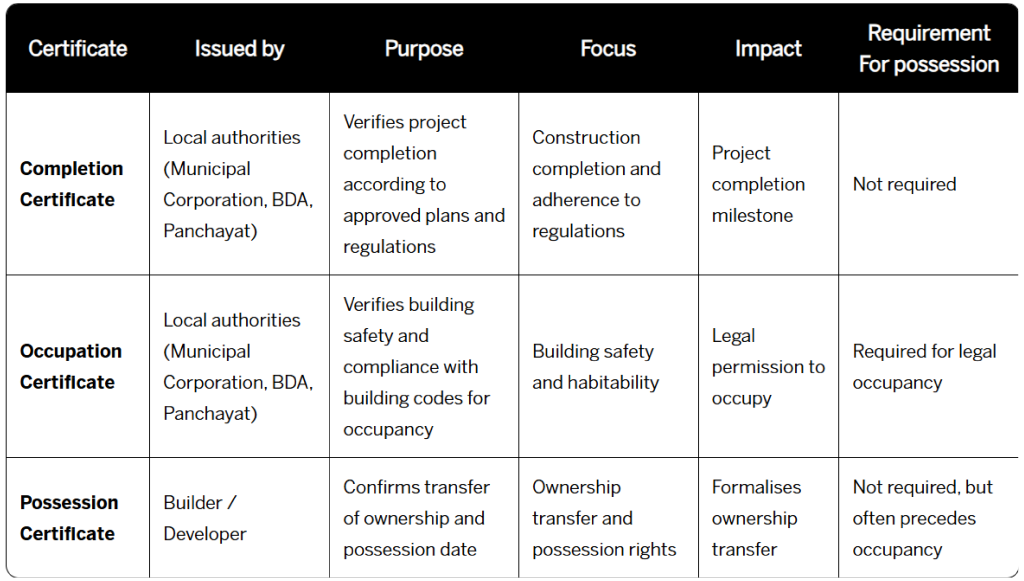
An Occupancy Certificate (OC) is a legal document issued by local authorities like BBMP or Panchayat, confirming that:
- The building is constructed as per the approved plans
- All building regulations have been followed
- The property is safe and ready for occupancy
It also verifies access to essential services like:
- Water supply
- Electricity
- Drainage and sanitation
- Fire safety compliance
Why is an Occupancy Certificate Important?
1. Legal Ownership Protection
An OC strengthens your legal claim and protects you in case of disputes.
2. Better Resale Value
Homes with OC are more attractive to buyers and sell faster.
3. Safety Assurance
Confirms the building meets safety and construction standards.
4. Easier Home Loans
Banks prefer or require OC before approving loans.
5. Insurance Eligibility
Without an OC, insurance premiums may be higher, or coverage may be denied.
What is a Completion Certificate (CC)?
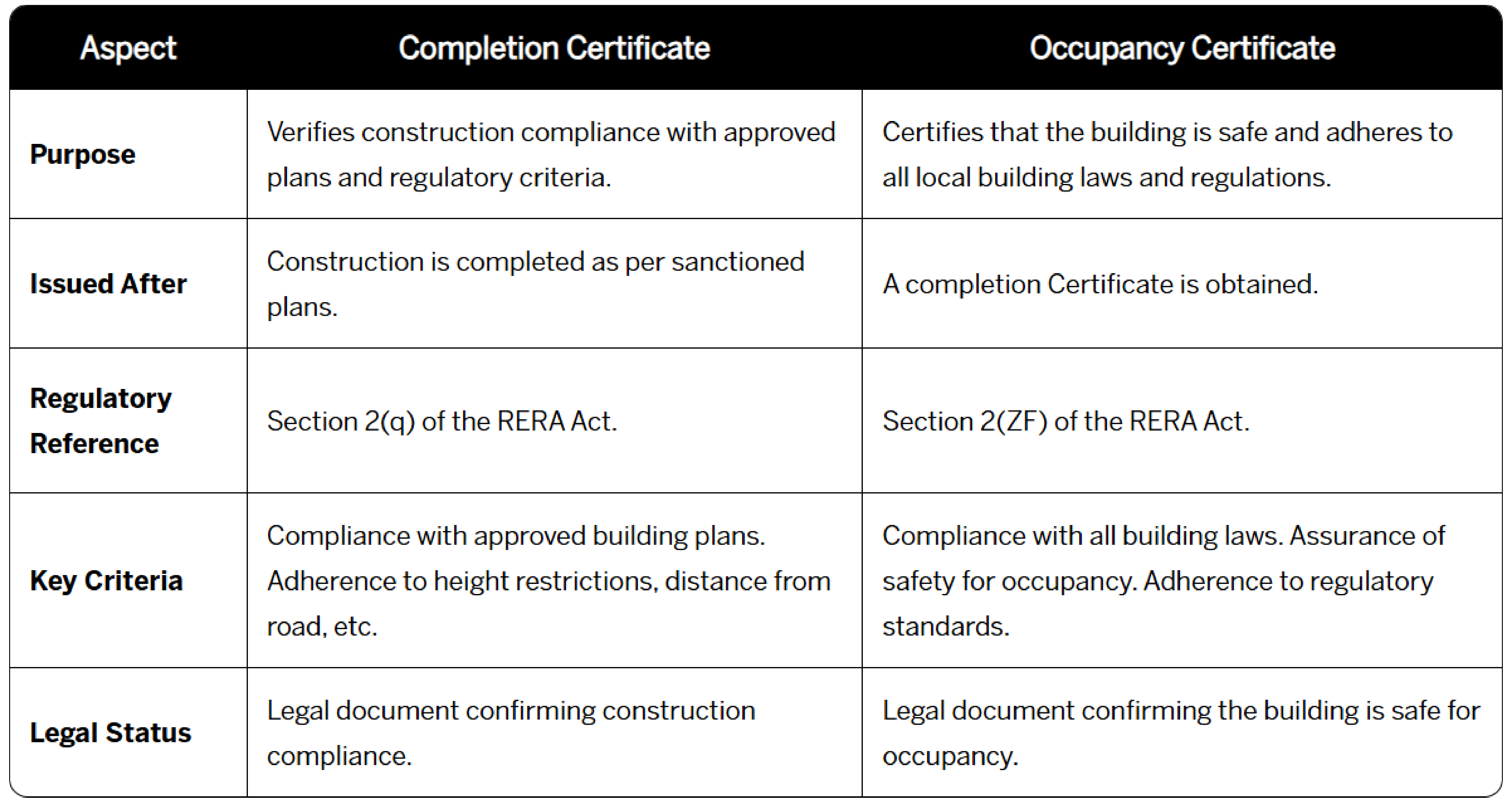
A Completion Certificate (CC) is issued by local authorities after construction is completed.
It confirms that:
- The building follows approved plans
- Construction meets legal and regulatory requirements
However, CC does NOT mean the property is ready to live in. That’s where the OC comes in.
What is a Partial Occupancy Certificate (POC)?
A Partial Occupancy Certificate (POC) is issued for large or phased projects.
- Allows occupancy of completed phases
- Some amenities may still be under construction
- Valid temporarily until full project completion
Builders must obtain the final OC after project completion.
How to Apply for an Occupancy Certificate in Bangalore
Typically, the builder or developer applies for the OC via the RERA portal.
Documents Required:
- Project commencement certificate
- Completion certificate
- Approved building plans
- Fire and pollution NOCs
- Architect-certified floor details
- Property tax receipts
- Photos of the completed structure
- Proof of rainwater harvesting & solar panels
Timeline: Usually 30–90 days
How to Check Occupancy Certificate (OC) Status Online in Bangalore (BBMP)
You can verify OC status easily:
1. Visit the BBMP official website
2. Go to Citizen Services / Online Services
3. Enter property details or application number
4. View or download the OC
You can also check via the Karnataka RERA website.
How to Check OC Offline
1. Visit the nearest BBMP office
2. Request the OC application form
3. Submit property and ownership details
4. Attach required documents
5. Pay applicable fees
6. Track application status
7. Collect and verify OC
What Happens if a Property Has No OC?
Buying a property without an OC is risky.
Major Risks:
- Legal complications in ownership
- Difficulty in resale
- Home loan rejection
- Safety concerns
- Possible penalties or demolition notices
In some cases, authorities can even take legal action.
Is Occupancy Certificate Mandatory in Bangalore?
Yes.
An OC is legally required for occupying a property in Bangalore.
Without it:
- The building may be considered unauthorised
- Utility connections can be restricted
- Legal ownership becomes questionable
Can I Buy a Property Without an OC?
It’s generally not recommended. Here’s why:
-
Legal Hurdles :
The resale of a property without an OC can be difficult because most buyers do not want to buy a home without it.
-
Safety Concerns :
The absence of an OC might indicate issues with the building’s compliance with safety regulations.
-
Complications in Loans from financial institutions :
Securing a home loan can be challenging if the property lacks an OC.
What does an OC mean for the Homeowner?
A house/ apartment should have an OC because –
-
OC implies the safety of the project and its compliance with the standard protocols.
-
It is illegal to sell a property without an OC because it is considered to be an unauthorised structure.
-
Without an OC, you are not the legal owner of the property.
-
In the absence of an OC, the legal authorities can initiate legal action against the homeowner.
-
Possession of OC makes it easier to obtain a home loan.
What if my property is under BDA or Panchayat?
BDA & Panchayat OC Process
For properties under BDA or Panchayat jurisdiction, obtaining an Occupancy Certificate (OC) involves the local governing body. Here’s the breakdown:
Local Authority Conducts Inspections: The local authority meticulously inspects the property to ensure:
-
Compliance with Approved Plans :
Matches the blueprints submitted for approval.
-
Building Regulation Adherence :
Meets all relevant construction and safety regulations.
-
Overall Safety Standards :
Provides a safe and habitable environment.
Only if the property fulfils all the above requirements will the local authority grant the OC, signifying it’s safe for occupancy.
What legal action can be taken if the builder fails to provide an OC?
Under Section 11(4)(b) of The Real Estate (Regulation and Development) Act, 2016, the promoter must obtain the Occupancy Certificate (OC) from the appropriate authority and ensure its availability to the buyers.
If a builder fails to provide an OC despite repeated requests, homeowners can take the following legal actions:
-
File a Legal Complaint :
According to the Real Estate Regulatory Authority (RERA), you can file a legal complaint against the builder or developer for his inability to provide the OC to the RERA Appellate Tribunal.
-
File an RTI (Right to Information) :
You can file an RTI application to the BBMP/ BMRDA authority to understand the reasons for the delay in the project and know the status of the OC.
-
Serve a Legal Notice :
Serving a legal notice to the builder can put additional pressure on them to provide the OC.
-
Claim Compensation :
RERA has specified compensation from the builder in cases of delays and non-compliance.
Key Takeaway
An Occupancy Certificate (OC) is not just paperwork—it’s your legal, financial, and safety shield.
Before buying any property in Bangalore:
✔ Verify OC
✔ Check CC
✔ Confirm approvals
Skipping this step can cost you far more in the future.
Conclusion
To sum up, both the Occupancy Certificate (OC) and Certificate of Occupancy (OC) are crucial documents in property ownership. Though they are often used interchangeably, they serve the same purpose: to officially confirm that a newly constructed building is structurally sound and complies with legal and safety standards.
These certificates are issued after thorough inspections by local authorities, such as the BBMP or Panchayat, to ensure the building adheres to zoning ordinances, building codes, and safety regulations. This includes verifying that the building meets essential requirements for safe habitation, such as fire safety, sanitation, ventilation, and access to basic utilities like water and electricity.
In short, obtaining the OC or Certificate of Occupancy is a key step in the process of property ownership, providing legal assurance that the building is fit for use.
Read our Latest Blogs

UDS Full Form and Meaning: What Every Bangalore Flat Buyer Should Know

Real Estate Basics
- September 7, 2026
- 17 min read

RERA Terms and Definitions Every Homebuyer in Karnataka Should Know
Regulatory & Legal Guide
- August 28, 2026
- 36 min read

STRR vs PRR Bangalore 2026: Route, Key Differences, Status & Real Estate Impact
Buying & Investing Insights
- August 19, 2026
- 22 min read

Explore Projects


Independent 4 & 5 BHK Villas
starts @ 5 Cr


Sarjapur’s Exclusive 3 BHK Community
starts @ 1.8 Cr

Multi-Gen 2 & 3 BHK Homes
Starts @ 1.87 Cr
Refer & Earn Up to 2%

Invite your friends to explore Modern Spaaces projects and earn up to 2% on every successful booking.

Find your Dream Home. Let's talk
Tell us a bit about what you're looking for. One of us will get back to you!