
Essential Legal Documents for Property Purchase in India (As Per RERA Guidelines)

Regulatory & Legal Guide
- March 23, 2026
- 10 min read
Let’s be honest, stories about property fraud and homebuyers getting scammed are everywhere. You’ve probably seen those headlines: Real Estate scams! Homebuyers duped!
Maybe you’ve even heard it from a friend, or a friend of a friend, who went through a nightmare experience trying to buy a home. It’s enough to make anyone nervous.
Can you buy a home without worrying about getting cheated? Is there a way to protect yourself from falling into these traps?
The good news is, yes, there is! In this blog, we’ll talk about a simple but important way to keep yourself safe, which is by securing important documents and verifying their legitimacy.
These steps will make your home-buying experience smoother and stress-free. Specifically, we will cover the essential documents required for land purchase in Karnataka, ensuring you navigate the process with confidence. So let’s get started!
Why are legal documents essential?
Legal documents provide detailed information about the property, including its size, boundaries, and any applicable limitations, ensuring transparency and full disclosure. Therefore, homebuyers need to be familiar with the documents required when buying a property. Legal documents serve as proof of ownership and help complete the property transaction in a secure and legally compliant manner.
The keytakeaway been that the Sarkari kagaaz or Legal documents (Our parents have literally told us so many times), while buying a property, are important as they clearly define the rights and responsibilities of both buyers and sellers.
What are the legal documents required for buying property as per RERA?
Here’s a breakdown of the legal documents required for a property purchase —
1. Agreement for Sale
The agreement of sale is a document that consists of terms and conditions about the property that is being sold between the buyer and the seller. It mentions the property’s agreed price and the loan amount, as loans for resale properties are typically sanctioned based on the lower of either the agreement value or the market value.
This agreement serves as a preliminary contract that safeguards the interests of both parties during the transitional phase of the transaction. However, it does not result in the immediate transfer of ownership rights. Simply signing this agreement does not grant the buyer any legal interest or claim over the property.
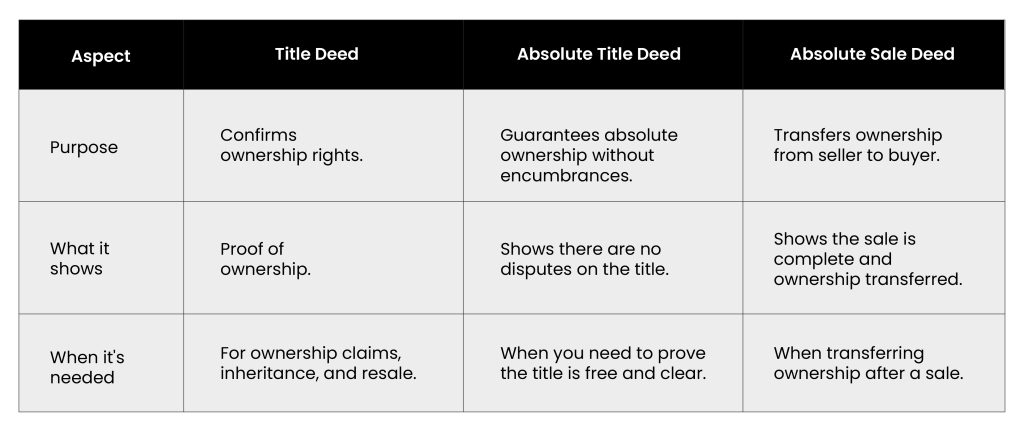
2. Title Deed, Absolute Title Deed and Absolute Sale Deed
Title Deed:
A title deed is an official legal document that confirms property ownership. It contains essential details such as the property’s location, dimensions, and any associated rights or obligations. Additionally, it records the ownership history, including previous owners and past transactions affecting the property. A valid title deed is necessary for transferring ownership, making it a crucial requirement when buying or selling real estate. It is also a key document for securing a home loan or any other property-backed loan, as lenders require it as proof of ownership.
Absolute Title Deed:
An absolute title deed certifies full and unrestricted ownership of a property. It ensures that there are no outstanding claims, liens, or encumbrances that could limit the owner’s rights. The holder of an absolute title has complete authority to sell or transfer the property as they see fit. This is the highest form of property ownership and is the most commonly granted title.
Absolute sale deed:
An absolute sale deed is a legal document that facilitates the transfer of property ownership from the seller to the buyer. This document serves to permanently transfer property rights, ensuring the buyer becomes the legitimate owner. It is finalised after the full purchase price has been paid, detailing the complete terms of the sale.
To enhance its legal validity and credibility, the document is notarised, verifying the authenticity of the transaction and the identities of the signing parties. It includes the names and addresses of the involved parties, a legal description of the property, the agreed purchase price, and the date of completion.
Before signing the sale deed, buyers must:
- Verify a clear title of the property.
- Ensure there are no outstanding encumbrances.
- Check the terms stated in the agreement.
3. Title/Legal Search and Report
A title search retrieves the property’s historical documents registered with the government. It includes details such as property description, titleholder names, and joint tenancy status, ensuring a clear title. This process is crucial, especially for home loan approvals.
4. Khata Certificate
The “Khata” certificate means an account in Karnataka; each state has this document, which may be known by different terms like khatian in Bihar, Jambandi in Haryana and Assam. It is a legally significant document needed to buy a house. This official record facilitates tax remittance, licensing procedures, loan acquisition, and property approvals. This revenue document contains essential property details like size, location, and land classification for tax purposes. It is required for housing loans, electricity, and water connection applications.
5. Property Tax Receipts
When buying a resale flat in India, it’s essential to check the property’s utility bills and tax receipts. These documents reveal the seller’s financial responsibility and legal compliance. Carefully review the water and electricity bills to ensure there are no unpaid dues, as you could inherit these debts.
Consistent payment of these bills also shows that the property has been well-maintained. Additionally, verifying property tax receipts is crucial to confirm that the seller has complied with local regulations, ensuring the property is free of tax-related legal issues. Skipping these checks could lead to future legal and financial problems, making them a vital part of the resale flat purchase process in India.
6. Encumbrance Certificate (EC)
An Encumbrance Certificate (EC) is a document from the Sub-Registrar’s office in Karnataka that proves a property has a clear title, meaning it’s free from any financial or legal obligations. It shows that the property isn’t mortgaged and has no pending disputes.
The EC is important for several reasons:
1. It confirms that the property has a clear title, with no legal issues or mortgages.
2. Banks require it before approving a loan against the property.
3. It’s mandatory when buying or selling property to ensure that the buyer knows that the property is legitimate.
4. Some government subsidies and benefits related to property also require an EC.
The EC includes details like:
- All transactions related to the property during the requested period.
- A description of the property, including its location, size, and type.
- Personal details of everyone involved in each transaction.
- Information about any loans, dues, or legal issues tied to the property.
7. Occupancy Certificate (OC)
The Occupancy Certificate (OC) is the official go-ahead or approval from the local government body (such as BBMP or Panchayat) that confirms the building has been constructed according to the approved plans and meets all building codes, ensuring it’s safe for occupancy. This certificate ensures transparency in the construction process and compliance with statutory requirements. It guarantees that the building has access to essential facilities like water, electricity, proper ventilation, fire safety measures, and sanitation.
8. No Objection Certificates (NOCs)
A No Objection Certificate (NOC) is an important document issued by government bodies, local authorities, banks, or individuals. It confirms that there are no objections to a property transaction, helping to prevent legal issues.
Getting an NOC is essential for property transfers and land registration. It allows the government to keep track of and prevent the growth of illegal colonies. For land transfers or developing colonies, securing NOCs from the relevant departments is mandatory.
9. Local Development Authority Approvals
This refers to a comprehensive site plan outlining the entire project, including positioning plots or building blocks, roads, open spaces, entry and exit points, parking areas, and landscaping. It details the intended use of all land parcels within the development.
- Building Approval Plan
A Building Approval Plan is a legally binding blueprint sanctioned by local authorities, necessary for any construction project. Building without this approval is considered illegal.
- Components of a Building Approval Plan
Often referred to as a blueprint, a Building Approval Plan includes several key elements that help visualise the project before construction begins. These typically include:
- Site Plan
- Floor Plan
- Structural Plan
- Terrace Plan
- Elevation Plan
10. Power of Attorney (PoA)
A Power of Attorney (POA) is a legal form where you may appoint a person you trust (the Attorney-in-fact) to conduct the buying or selling of property on your behalf. This comes in handy if you cannot be present for some reason like distance, ill health, or other valid excuses.
The POA authorises the Attorney-in-fact to sign the sale deed, put your name on the property deed, and deal with any money issues involved in the transaction. It is an easy method of handing over property issues to a trusted individual. But remember to appoint someone you absolutely trust.
11. Builder-Buyer Agreement
The Builder Buyer Agreement (BBA) is a legal contract between a property buyer and a builder or developer. It sets out the rules for buying a property, such as payment plans, deadlines, inspection rights, and the responsibilities of both parties.
The importance of the BBA has increased since the Real Estate (Regulation & Development) Act (RERA) of 2016. RERA requires developers to register their projects with the state government before selling or transferring the property to buyers. This ensures transparency and protects buyers.
The BBA is essential for safeguarding buyers and making sure they get the property as promised. If there are problems with the property, the BBA gives buyers a way to seek legal help and hold the developer accountable.
- General Conditions: These are standard terms that apply to every property buyer. They cover things like the builder’s responsibility to fix any construction defects, who pays the stamp duty, and other common rules that everyone agrees to.
- Special Conditions: These are specific terms tailored to the individual buyer. They typically cover details such as the payment schedule, possession date, and any particular agreements made between the buyer and builder.
- Product Specifications: This section outlines the technical and design aspects of the property. It details the quality of materials used, design features, and any other relevant specifications to ensure that the property meets the agreed-upon standards.
12. Allotment Letter
Allotment Letter: This document confirms that a buyer’s application for a property has been accepted. It provides details like the property description, unit number, price, and possession date. It’s essentially a formal notification from the developer that the property has been allocated to the buyer.
13. Compliance under RERA 2016
The RERA registration certificate is your assurance that the developer is responsible and operates fairly. Being RERA compliant means that the developer has complied with all the regulations required, giving you protection against any issues that might arise. You can quickly check the property’s RERA registration on the government’s official RERA website.
14. Approval of Bank Loan
If a bank has sanctioned a loan for your flat, you will receive a bank loan sanction certificate. It simply indicates that the bank has verified the property and deemed it eligible for a home loan. It’s an indication that your property has cleared the bank’s meticulous checks, making you certain of your purchase.
15. Tax and Utility Dues
Before purchasing, request the most recent property tax receipts. Ensure that the builder or previous owner has paid all taxes. Check for any outstanding electricity, water, and maintenance bills as well. If these bills are not paid, you may have to pay them, increasing your cost.
How to establish Land Ownership in Bangalore?
To prove your ownership of land in Bangalore, these documents are essential:
- Sale Deed: The official transfer document.
- Title Deed: Confirms your legal ownership.
- Encumbrance Certificate: Shows if there are any outstanding loans or legal issues against the land.
- Khata Certificate: A key document for property tax assessment in Bangalore.
- Property Tax Receipts: Evidence of paid property taxes.
How to establish Flat Ownership in Bangalore?
To prove your ownership of a flat in Bangalore, these documents are essential:
- Sale Agreement: The contract outlining the flat’s purchase.
- Sale Deed: The legal document transferring ownership.
- Allotment Letter: Issued by the builder, confirming your flat allocation.
- Occupancy Certificate: Verifies the flat is ready for you to move in.
- Maintenance Bills: Proof of your payments for building upkeep.
What are the common real estate scams every homebuyer should watch out for?

1. Non-Existent or Unapproved Projects
Some developers promote projects that either don’t exist or lack proper approvals. Protect yourself by researching the developer’s reputation, verifying permissions with local authorities and RERA, and visiting the project site in person.
2. Inflated Floor Area Claims
Be cautious of developers who exaggerate a property’s square footage to inflate prices. Always measure the flat’s dimensions or hire a professional to ensure you are getting what you pay for.
3. Title Fraud
Before purchasing, confirm that the seller holds a clear and marketable title. Conduct a title search and consult legal experts to ensure there are no encumbrances, disputes, or pending litigation tied to the property.
4. Counterfeit Documents
Fraudsters may present fake documents like sale agreements, receipts, or occupancy certificates to deceive buyers. Always verify the authenticity of these documents through legal channels and due diligence.
5. Undisclosed Cash Transactions
Cash deals involving unaccounted-for money, or “black money,” are illegal and risky. Ensure all payments are made through legal banking channels and keep proper documentation to avoid legal troubles later.
6. False Promises
Some builders or agents make unrealistic promises about floor plans or amenities, only to fall short. Ensure all commitments are documented in the agreement to safeguard your interests.
7. Under-Construction Property Fraud
When buying under-construction properties, there’s a risk that the builder may not complete the project or deliver substandard quality. Verify the builder’s track record and insist on a construction-linked payment plan.
8. Delayed Possession
Delays in the handover of a project are a very common issue due to unforeseen circumstances, including regulatory approval challenges, labour force limitations, and changes in project scope. Check the builder’s history for timely delivery and include a delay penalty clause in the agreement.
9. Fly-By-Night Builders
Some developers vanish after collecting payments, leaving buyers stranded. Avoid such risks by choosing financially sound developers with a proven track record and registered projects.
Secure your dream home with Modern Spaaces!
All our projects are RERA-certified, complete with legal approvals and essential documentation. Contact us today to make your dream home a reality.
Conclusion
It may all seem too daunting to navigate when it comes to the world of real estate in Bangalore, but knowing and checking key legal documents is your best protection from possible pitfalls. By verifying that documents such as the Sale Deed, Khata Certificate, RERA Registration, and Occupancy Certificate are legitimate, you’re not only purchasing a property but also your own peace of mind.
Remember, due diligence is important. Cross-check documents with government authorities, use online portals and don’t be afraid to take professional legal opinion. These actions will enable you to make sound decisions, safeguard your investment, and turn your dream of becoming a homeowner into a safe reality.
FAQ (Frequently Asked Questions)
1. What is the importance of the Absolute Sale Deed?
The Absolute Sale Deed is a critical legal document that confirms the transfer of ownership from the seller to the buyer. It serves as proof of property ownership and is necessary for registering the property with the sub-registrar’s office.
2. What is the role of a Title Search Report?
A Title Search Report verifies the property’s ownership history and ensures there are no disputes, loans, or encumbrances tied to the property. It is an essential document for both buyers and home loan approval.
3. Why is an Encumbrance Certificate necessary?
An Encumbrance Certificate (EC) ensures that the property is free from any legal or financial liabilities, such as loans or pending disputes. It also records all past transactions related to the property.
4. How does RERA protect homebuyers?
RERA ensures transparency by mandating developers to register their projects, disclose all necessary details, and adhere to approved plans. It provides a grievance redressal mechanism for buyers to resolve disputes effectively.
5. What is a Khata Certificate, and why do I need it?
A Khata Certificate is a revenue document that includes property details like size, location, and land classification. It is essential for paying property taxes, applying for utilities, and securing home loans.
6. What precautions should I take when buying an under-construction property?
Verify the builder’s RERA registration, check their track record, and insist on a construction-linked payment plan. Ensure all terms are documented in the sale agreement to avoid disputes later.
7. What is the significance of the Occupancy Certificate?
An Occupancy Certificate (OC) certifies that the building was constructed according to approved plans and is fit for occupancy. It is necessary to apply for water, electricity, and other utilities.
8. Can I purchase a property without a No Objection Certificate (NOC)?
No, NOCs from various departments, such as the Pollution Control Board and the Traffic Coordination Department, are required to ensure the property complies with statutory norms.
9. Why should I avoid cash transactions when buying property?
Cash transactions involving unaccounted money are illegal and can lead to legal troubles. Always make payments through banking channels and maintain proper documentation.
10. How can I verify the authenticity of property documents?
Cross-check documents with relevant government authorities, use RERA’s official portal and consult legal professionals for a thorough review.
Read our Latest Blogs

UDS Full Form and Meaning: What Every Bangalore Flat Buyer Should Know

Real Estate Basics
- September 7, 2026
- 17 min read

RERA Terms and Definitions Every Homebuyer in Karnataka Should Know
Regulatory & Legal Guide
- August 28, 2026
- 36 min read

STRR vs PRR Bangalore 2026: Route, Key Differences, Status & Real Estate Impact
Buying & Investing Insights
- August 19, 2026
- 22 min read

Explore Projects


Independent 4 & 5 BHK Villas
starts @ 5 Cr


Sarjapur’s Exclusive 3 BHK Community
starts @ 1.8 Cr

Multi-Gen 2 & 3 BHK Homes
Starts @ 1.87 Cr
Refer & Earn Up to 2%

Invite your friends to explore Modern Spaaces and earn up to 2% of the home value they buy.

Find your Dream Home. Let's talk
Tell us a bit about what you're looking for. One of us will get back to you!